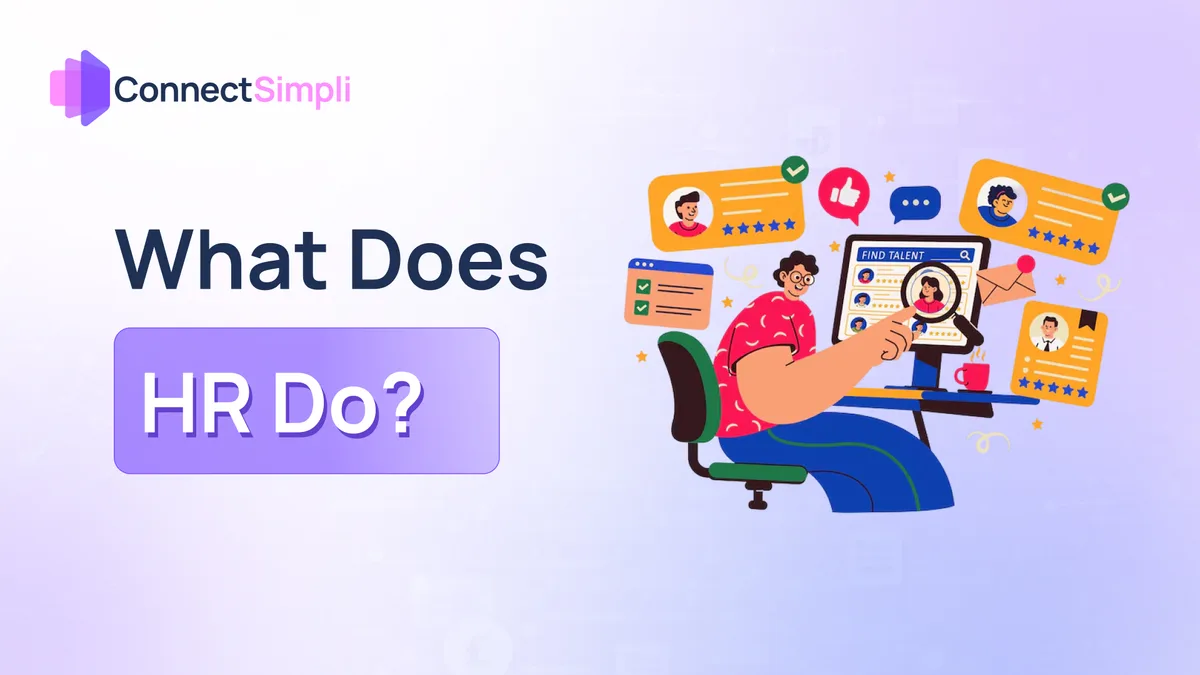
What Does HR Do?
If you’ve ever worked in a company, you’ve probably heard people mention HR.
But what does HR actually do?
Some people think HR is simply the department that handles hiring and paperwork.
In reality, HR has a much broader role.
Human Resources (HR) is responsible for managing many of the people-related processes within an organisation. HR helps businesses recruit employees, support them after they join, manage employee information, handle workplace concerns, support performance, and create organised processes for managing the workforce.
In simple terms, HR helps a company manage its people effectively.
The exact responsibilities can vary depending on the size and type of business, but the main goal remains the same: helping employees and the organisation work effectively together.
Let’s look at what HR does in more detail.
What Does HR Do in a Company?
An HR department can be involved throughout the entire employee lifecycle.
This can start before someone is hired and continue until they leave the organisation.
HR may be responsible for:
- Recruiting employees
- Onboarding new employees
- Managing employee information
- Managing attendance and leave
- Supporting employee relations
- Managing performance processes
- Supporting payroll
- Developing HR policies
- Maintaining employee documents
- Supporting employee development
- Preparing HR reports
Not every HR department handles all of these areas directly.
Some responsibilities may be shared with managers, finance teams, or other departments.
1. HR Helps Recruit Employees
One of the most visible HR responsibilities is recruitment.
When a company needs to hire someone, HR may help organise the recruitment process.
This can include:
- Understanding the hiring requirement
- Preparing job descriptions
- Advertising vacancies
- Reviewing applications
- Coordinating interviews
- Communicating with candidates
- Supporting the hiring process
HR may work closely with department managers because managers usually understand the technical requirements of a position.
The HR team helps make sure the overall hiring process is organised and consistent.
2. HR Onboards New Employees
Once a candidate accepts a job, HR’s work doesn’t stop.
The new employee needs to be introduced to the organisation.
This is called employee onboarding.
HR may help new employees understand:
- Their role
- Company policies
- Workplace expectations
- Team structure
- Required documentation
- Company processes
A structured Employee Onboarding process can make the first few weeks more organised for both employees and HR teams.
3. HR Manages Employee Information
HR departments deal with a large amount of employee information.
This may include:
- Employee names
- Contact details
- Job titles
- Departments
- Employment information
- Documents
- Salary information
- Attendance
- Leave records
Keeping this information accurate is important because other HR processes may depend on it.
A central Core HR system can help organisations organise employee information in one place.
4. HR Manages Attendance and Leave
HR may also be responsible for monitoring employee attendance and managing leave processes.
This can involve:
- Working hours
- Attendance records
- Absences
- Leave requests
- Leave balances
- Work schedules
Accurate attendance and leave information can also affect payroll calculations.
Dedicated Time and Attendance software and Leave Management software can help organisations organise these processes.
5. HR Supports Employee Relations
Employees sometimes have questions, concerns, or disagreements at work.
HR can provide a place where employees can raise these issues.
Employee relations may involve:
- Workplace concerns
- Employee complaints
- Conflicts
- Communication problems
- Workplace behaviour
- Policy questions
HR doesn’t automatically take the employee’s side.
Instead, HR should listen, understand the situation, review relevant information, and help the organisation handle the matter appropriately.
6. HR Supports Employee Performance
Another important HR responsibility is supporting performance management.
HR may help create processes for:
- Employee goals
- Performance reviews
- Feedback
- Development discussions
- Performance improvement
Managers usually play a major role in evaluating their employees.
HR helps provide the framework that makes these processes more consistent.
A structured Performance Reviews process can help organisations manage employee performance more systematically.
7. HR Works With Payroll
Payroll is closely connected to HR because employee information can affect salary calculations.
HR may provide or manage information related to:
- New employees
- Employee departures
- Salary changes
- Allowances
- Deductions
- Attendance
- Leave
Depending on the organisation, payroll may be managed by HR, finance, or a separate payroll team.
A dedicated Payroll Management solution can help businesses organise payroll-related processes.
8. HR Creates and Maintains Workplace Policies
Employees need to understand what is expected of them.
HR often helps create and communicate workplace policies.
These may cover:
- Attendance
- Leave
- Workplace conduct
- Employee responsibilities
- Performance
- Company procedures
Good policies provide employees and managers with clearer guidelines.
HR may also review policies when the organisation changes or when existing processes are no longer effective.
9. HR Helps Employees Develop
HR isn’t only about solving problems.
It can also help employees grow.
Employee development may include:
- Training
- Skill development
- Career discussions
- Coaching
- Mentoring
- New responsibilities
Developing existing employees can help organisations build the skills they need while giving employees opportunities to progress.
10. HR Helps Manage Employee Documents
HR departments often handle important employee documents.
These may include:
- Employment contracts
- Identification documents
- Certificates
- Policies
- Performance documents
- Other employment records
Keeping documents organised makes it easier for authorised HR staff to find the information they need.
A central Document Management system can help businesses keep employee documents more organised.
11. HR Collects Employee Feedback
HR also needs to understand how employees feel about the workplace.
Employee feedback can help HR identify:
- Workplace concerns
- Communication problems
- Employee satisfaction
- Areas for improvement
- Employee engagement issues
Businesses can collect feedback through surveys, meetings, interviews, and other channels.
Structured Employee Surveys can make it easier to collect feedback across a workforce.
12. HR Prepares Reports
HR managers and business leaders need information to understand their workforce.
HR reports may provide information about:
- Employee headcount
- Attendance
- Leave
- Turnover
- Performance
- Recruitment
- Workforce trends
This information can help businesses make more informed decisions.
Instead of relying only on assumptions, management can use HR data to identify patterns and potential problems.
13. HR Helps Organise Teams and Roles
As businesses grow, their organisational structure can become more complicated.
HR may help define:
- Departments
- Teams
- Job titles
- Reporting relationships
- Employee roles
A clear structure helps employees understand who they work with and who they report to.
14. HR Supports Management
HR doesn’t only work with employees.
HR professionals also work closely with managers and business leadership.
Managers may ask HR for support with:
- Hiring
- Employee performance
- Workplace concerns
- Team structures
- Employee development
- Policies
HR provides a people-focused perspective that can help managers make better decisions.
Why Is HR Important?
Without organised HR processes, businesses can quickly become difficult to manage as they grow.
Employees need clear expectations.
Managers need reliable employee information.
Business leaders need workforce data.
And employees need somewhere to go when they have workplace questions or concerns.
HR helps bring these areas together.
A good HR department can help create more organised employee processes while supporting both employees and business goals.
Does Every Company Need an HR Department?
Not every small company has a traditional HR department.
Some businesses may have:
- One HR employee
- An HR manager
- An outsourced HR provider
- A small people operations team
Larger organisations may have entire HR teams with specialists in recruitment, payroll, employee relations, learning and development, and other areas.
The structure depends on the organisation’s size and needs.
HR in Small Businesses
In a small business, one person may handle many different HR responsibilities.
For example, an HR employee might manage recruitment, employee records, attendance, leave, payroll coordination, and onboarding.
As the company grows, these responsibilities may become divided among different people or teams.
This is one reason why structured HR processes become increasingly important as a business expands.
How Does HR Technology Help?
HR departments can manage some processes manually, but this becomes harder as the workforce grows.
Spreadsheets, emails, folders, and separate systems can make it difficult to keep information organised.
Modern HR software can help bring different employee processes together.
For example, an HR software platform in Pakistan can help businesses centralise employee information and manage connected HR processes.
Technology doesn’t replace HR professionals.
Instead, it can reduce repetitive administrative work and give HR teams more time to focus on employees and business priorities.
Final Thoughts
So, what does HR do?
HR manages and supports many of the processes involved in an employee’s journey through an organisation.
From recruitment and onboarding to attendance, performance, employee relations, payroll support, and employee development, HR helps businesses create structure around managing their people.
But HR isn’t simply an administrative department.
At its best, HR helps connect employees, managers, and business leadership.
And as organisations grow, having organised HR processes becomes increasingly important.
FAQs About What HR Does
What does HR do?
HR manages and supports employee-related processes such as recruitment, onboarding, employee records, attendance, leave, performance, employee relations, and HR policies.
What is the main role of HR?
The main role of HR is to help an organisation manage its workforce effectively while supporting employees and business goals.
Does HR handle payroll?
In some organisations HR manages payroll, while in others payroll is handled by finance or a dedicated payroll team.
Does HR deal with employee problems?
Yes. HR can help employees and managers address workplace concerns, conflicts, complaints, and policy-related questions.
Why is HR important?
HR provides structure around employee management and helps organisations manage their workforce more effectively.