What Is Human Capital Management?
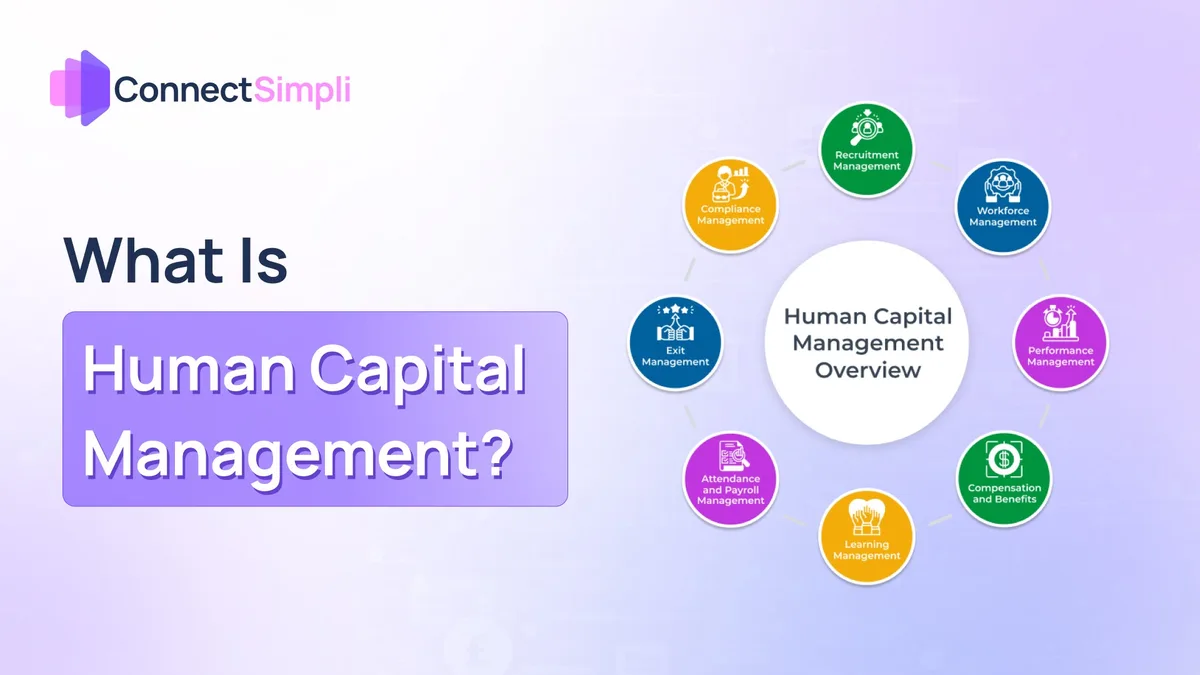
Human Capital Management (HCM) is the process of managing an organisation’s employees as an important business resource. It covers the different stages of the employee journey, from hiring and onboarding to development, performance management and eventually leaving the organisation.
In simple terms, human capital management is about managing people effectively so employees can contribute to the organisation while also developing their skills and careers.
HCM can involve HR processes, people management strategies, technology and data. Many organisations use HR software and HCM systems to organise employee information and automate routine HR tasks.
What Does Human Capital Management Mean?
Human capital refers to the knowledge, skills, experience and abilities that employees bring to an organisation.
Human Capital Management is the structured approach an organisation uses to manage and develop those people.
It can include areas such as:
- Recruitment
- Employee onboarding
- Employee information
- Time and attendance
- Leave management
- Performance management
- Learning and development
- Career development
- Employee engagement
- Compensation and payroll
- Workforce planning
- Employee retention
The exact areas covered by HCM can differ between organisations.
Why Is Human Capital Management Important?
Employees play an important role in the performance of almost every organisation.
Managing employee information and HR processes effectively can help businesses create a more organised workplace and give managers better visibility into their workforce.
HCM can help organisations:
Organise employee information
Instead of keeping employee information across different spreadsheets, documents and systems, organisations can use a central HR system to manage important employee data.
Improve employee onboarding
A structured onboarding process helps new employees receive the information, documents and support they need when joining the organisation.
Support employee development
HCM can help organisations understand employee skills, performance and development needs.
Manage performance
Performance management allows organisations and employees to discuss objectives, progress and development.
Improve workforce planning
HR teams can use employee information and workforce data to understand their current workforce and plan for future requirements.
What Are the Main Components of HCM?
Human Capital Management covers a broad range of HR activities.
1. Recruitment
HCM starts before someone becomes an employee.
Recruitment involves identifying workforce requirements, attracting candidates, assessing applicants and selecting suitable employees.
The aim is to bring people into the organisation who have the skills and experience required for the role.
2. Employee Onboarding
Once someone joins the organisation, onboarding becomes an important part of the employee journey.
A structured onboarding process can help employees understand:
- Their role
- Responsibilities
- Company policies
- Working arrangements
- Team structure
- Expectations
- Available resources
Good onboarding can help new employees settle into their roles more easily.
3. Employee Data Management
HR teams need accurate employee information to manage the workforce.
This can include:
- Personal information
- Job details
- Department
- Job title
- Employment dates
- Contact information
- Documents
- Leave information
- Attendance records
A centralised employee management system can make this information easier to maintain.
4. Time and Attendance
HCM can include managing when employees work and recording attendance.
Depending on the organisation, this can involve:
- Attendance
- Working hours
- Overtime
- Work schedules
- Absence
- Leave
Accurate attendance information can also support payroll calculations.
5. Performance Management
Performance management is another important part of HCM.
It can involve:
- Setting objectives
- Performance reviews
- Feedback
- Progress tracking
- Development discussions
- Employee goals
A structured performance process gives employees and managers an opportunity to discuss performance and future development.
6. Learning and Development
Employees may need new skills as their roles and organisations change.
Learning and development can include:
- Training
- Professional development
- Skills development
- Coaching
- Mentoring
- Career planning
Investing in employee development can also help organisations build skills internally.
7. Compensation and Payroll
Compensation is another important part of managing employees.
Payroll management can include:
- Salaries
- Overtime
- Allowances
- Deductions
- Bonuses
- Tax
- National Insurance
- Payslips
While payroll is often treated as a separate HR function, it forms an important part of the overall employee management process.
What Is the Difference Between HCM and HRM?
Human Capital Management and Human Resource Management are closely related terms, but they can be used with slightly different emphasis.
HRM (Human Resource Management) generally focuses on managing the organisation’s employees and day-to-day HR activities.
HCM (Human Capital Management) often takes a broader approach that also focuses on the value, development and strategic management of employees.
For example:
HRM: Managing employee leave, attendance and HR administration.
HCM: Managing those processes while also using workforce information to support employee development, planning and organisational goals.
The terms can overlap, and different software providers may use them differently.
What Is an HCM System?
An HCM system is software designed to help organisations manage their human capital and HR processes.
Depending on the system, it may bring together areas such as:
- Employee records
- Recruitment
- Onboarding
- Attendance
- Leave
- Performance
- Goals
- Payroll
- Reporting
- Employee engagement
The purpose is to reduce fragmented HR processes and give HR teams and managers a central place to manage workforce information.
HCM Software vs HR Software
The terms HCM software and HR software are sometimes used interchangeably.
HR software generally refers to technology that helps businesses manage HR processes.
HCM software can refer to a broader platform that combines HR administration with workforce management, talent, performance and strategic people processes.
There is no universal feature list that defines exactly where HR software ends and HCM software begins.
How Does Human Capital Management Work?
A typical HCM process can follow the employee lifecycle.
Attract
The organisation identifies workforce requirements and recruits employees.
Hire
Candidates are selected and employment information is collected.
Onboard
New employees are introduced to the organisation and given the information they need.
Manage
HR teams manage employee information, attendance, leave, payroll and other day-to-day processes.
Develop
Employees receive feedback, training and opportunities for development.
Retain
The organisation focuses on employee engagement, development and career opportunities.
Exit
When an employee leaves, HR manages the relevant exit and payroll processes.
This employee lifecycle approach helps organisations think about people management as a continuous process rather than a collection of separate HR tasks.
What Are the Benefits of Human Capital Management?
A well-organised HCM approach can provide several benefits.
Better HR organisation
Centralising employee information can make everyday HR administration easier.
Improved data visibility
HR teams and managers can access relevant workforce information more easily.
More efficient processes
Automation can reduce repetitive administrative work.
Better employee experience
Clear onboarding, leave, performance and communication processes can make the employee journey more organised.
More informed decisions
HR reports and workforce data can help organisations understand trends and make informed people-management decisions.
Support for business growth
As a company grows, managing employees through disconnected spreadsheets and manual processes can become increasingly difficult. An organised HCM approach can help HR processes scale with the business.
What Is the Role of HR in Human Capital Management?
HR plays a central role in HCM.
HR teams may be responsible for:
- Maintaining employee records
- Supporting recruitment
- Managing onboarding
- Managing employee policies
- Monitoring attendance and leave
- Supporting performance management
- Coordinating employee development
- Managing payroll processes
- Producing HR reports
- Supporting managers and employees
The exact responsibilities depend on the organisation.
Human Capital Management and Employee Experience
HCM is not only about administration.
The way HR processes are designed can influence the employee experience.
For example, employees may interact with HR systems when they:
- Join the organisation
- Request leave
- Check attendance
- View payslips
- Complete performance reviews
- Set goals
- Update employee information
- Complete surveys
Making these processes simple and accessible can contribute to a more organised employee experience.
How Can HR Software Support HCM?
Technology can bring different HR processes together in one system.
For example, ConnectSimpli provides HR and payroll software that helps businesses manage employee information and a range of HR and payroll processes from a central platform.
Instead of managing every process separately, businesses can use connected HR workflows for areas such as employee management, onboarding, attendance, leave, performance and payroll.
The right system depends on the size of the organisation, its HR requirements and the processes it needs to manage.
Frequently Asked Questions
What is Human Capital Management?
Human Capital Management is the process of managing and developing an organisation’s employees, including areas such as recruitment, onboarding, employee management, performance, development and payroll.
What does HCM stand for?
HCM stands for Human Capital Management.
What is an HCM system?
An HCM system is software that helps organisations manage employee information and HR processes throughout the employee lifecycle.
What is the difference between HCM and HRM?
HRM generally focuses on managing employees and HR activities, while HCM often takes a broader approach that includes workforce development, talent and strategic people management.
Is payroll part of HCM?
Payroll can be part of an HCM platform. Some HCM systems include payroll alongside HR, workforce management and employee development processes.
What are examples of HCM?
Examples of HCM activities include recruitment, onboarding, employee data management, attendance, leave, performance management, learning and development, compensation and workforce reporting.
Why is HCM important?
HCM helps organisations manage their employees in a more structured way and can support better HR processes, employee development, workforce planning and decision-making.
Final Thoughts
Human Capital Management is about managing people throughout the employee lifecycle while supporting their development and contribution to the organisation.
It brings together many areas of HR, from recruitment and onboarding to performance, development, employee management and payroll.
For growing businesses, using technology to connect these processes can make HR administration more organised and give HR teams better visibility of their workforce.