What Is an EVP (Employee Value Proposition)?
If you work in HR, recruitment or employee management, you may have come across the term EVP, or Employee Value Proposition.
So, what is an EVP?
An Employee Value Proposition is the overall value an organisation offers its employees in return for their skills, experience and contribution. It covers the things employees receive from working for an organisation, as well as what the organisation expects from them.
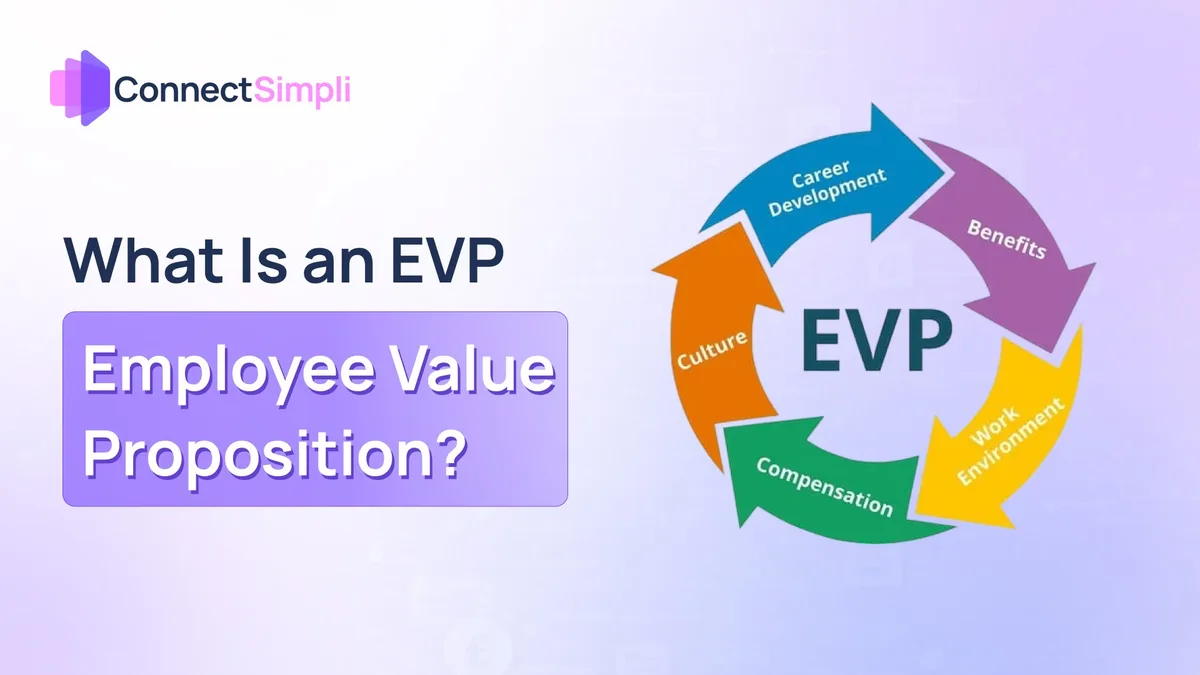
An EVP can include salary and benefits, career development, workplace culture, flexibility, recognition, learning opportunities and the overall employee experience.
A strong EVP can help an organisation explain why someone would want to work there and why existing employees may want to stay.
The CIPD describes an employee value proposition as what an organisation stands for, requires and offers as an employer.
What Does EVP Stand For?
EVP stands for Employee Value Proposition.
It is essentially the answer to a simple question:
“Why should someone want to work for this organisation?”
An EVP brings together the main things an employer offers and the experience employees can expect.
For example, an organisation’s EVP might include:
- Competitive pay
- Flexible working
- Career progression
- Training and development
- Employee recognition
- Health and wellbeing support
- A positive workplace culture
- Meaningful work
- Work-life balance
- Strong leadership
Not every organisation will have the same EVP. What employees value can vary depending on the industry, workforce, role and organisation.
Why Is an Employee Value Proposition Important?
An EVP can influence how an organisation attracts, engages and retains employees.
People do not usually choose an employer based only on salary. They may also consider career opportunities, workplace culture, flexibility, management, benefits and the overall employee experience.
A clear EVP helps bring these elements together.
Attracting employees
A well-communicated EVP can help potential employees understand what an organisation offers beyond the job description.
Improving employee engagement
When the employee experience matches what an organisation promises, employees may have a clearer understanding of what their workplace stands for.
Supporting retention
Employees who feel that their needs and expectations are being met may be more likely to remain with an organisation.
Strengthening employer branding
EVP and employer branding are closely connected. Employer branding is how an organisation is perceived as an employer, while the EVP describes the value and experience it aims to provide.
The CIPD notes that organisations should measure the impact of their employer brand and consider whether the business is actually delivering what its employer brand promises.
What Are the Main Elements of an EVP?
There is no single formula for creating an Employee Value Proposition, but most EVPs cover several common areas.
1. Salary and financial rewards
Pay is an important part of the employee experience.
An organisation may include:
- Competitive salaries
- Performance bonuses
- Commission
- Allowances
- Pension contributions
- Other financial benefits
However, compensation is only one part of an EVP.
2. Benefits
Benefits can make an employment package more attractive.
These could include:
- Paid holiday
- Flexible benefits
- Health-related benefits
- Workplace pension
- Employee discounts
- Family-friendly benefits
The benefits offered will depend on the organisation and its employees.
3. Career development
Employees often want to know where their career can go.
Career development can include:
- Training
- Mentoring
- Professional development
- Internal promotions
- Career planning
- Leadership development
An organisation that provides opportunities to learn and progress can make career development an important part of its EVP.
4. Workplace culture
Culture describes how people experience the organisation and work with each other.
This can include:
- Leadership style
- Communication
- Collaboration
- Inclusion
- Recognition
- Trust
- Employee relationships
Culture can be difficult to communicate through a simple list of benefits because employees experience it through everyday work.
5. Flexibility and work-life balance
Flexible working has become an important consideration for many employees.
An EVP might include:
- Hybrid working
- Remote working
- Flexible hours
- Flexible schedules
- Family-friendly working arrangements
The important point is that the EVP should reflect what the organisation can realistically provide.
What Is the Difference Between EVP and Employer Branding?
EVP and employer branding are related, but they are not exactly the same.
Employee Value Proposition describes the value and experience an organisation offers its employees.
Employer branding is the organisation’s reputation and image as an employer.
Think of it this way:
EVP = What we offer and what employees can expect
Employer brand = How people perceive us as an employer
Your EVP can therefore become an important part of your employer branding strategy.
What Is an EVP in HR?
In HR, an EVP can be used to support several areas of people management.
HR teams may use an EVP when working on:
- Recruitment
- Employee engagement
- Retention
- Employer branding
- Career development
- Employee benefits
- Workplace culture
- Employee experience
For example, an HR team could use its EVP when creating job advertisements so candidates understand more about the organisation than simply the responsibilities of the role.
How to Create an Employee Value Proposition
Creating an EVP should start with understanding what employees actually value.
Step 1: Understand your employees
Use employee surveys, interviews and feedback to find out what employees like about working for the organisation.
Ask questions such as:
- Why did you join us?
- What do you enjoy about working here?
- What would make you stay longer?
- What could we improve?
- What benefits matter most to you?
- Do you see opportunities for career growth?
Employee surveys can provide useful information for identifying common themes.
Step 2: Understand what candidates want
Look at recruitment feedback, interviews and candidate questions.
Candidates may regularly ask about:
- Salary
- Benefits
- Flexible working
- Career progression
- Company culture
- Training
- Working environment
These questions can reveal what potential employees consider important.
Step 3: Identify your strengths
Look for areas where the organisation genuinely provides value.
For example, you may discover that employees particularly appreciate:
- Flexible working
- Supportive managers
- Learning opportunities
- Career progression
- Team culture
These strengths can form part of the EVP.
Step 4: Identify gaps
Your EVP should not simply describe what you want people to believe.
It should reflect the actual employee experience.
If your organisation promotes career development but employees have little access to training or progression, there is a gap between the EVP and reality.
Step 5: Communicate the EVP
Once the EVP is defined, communicate it consistently across:
- Careers pages
- Job advertisements
- Recruitment
- Onboarding
- Internal communications
- Employee development
- Employer branding
The goal is to make the employee experience consistent with the promises being made.
EVP Examples
An EVP can be simple.
For example:
“Grow your career, work flexibly and be part of a team where your ideas matter.”
This could communicate three key parts of the EVP:
- Career development
- Flexible working
- Employee voice
Another organisation might focus more heavily on learning:
“Build your skills, work with experienced professionals and develop a career with us.”
There is no universal EVP that works for every organisation.
The best EVP reflects the organisation’s actual culture, workforce and employee experience.
How Can HR Measure an EVP?
An EVP should not simply be written and forgotten.
HR teams can monitor whether the employee experience is matching the promises being made.
Useful measures can include:
- Employee engagement
- Employee retention
- Staff turnover
- Recruitment applications
- Offer acceptance rates
- Employee feedback
- Internal promotions
- Absence trends
- Employee satisfaction
The CIPD highlights the importance of having measures that can be reviewed regularly when evaluating employer brand impact.
What Makes a Good EVP?
A good Employee Value Proposition should be:
Authentic – It should reflect the real employee experience.
Relevant – It should address things employees actually value.
Clear – Employees and candidates should understand it easily.
Distinctive – It should communicate what makes the organisation different.
Consistent – The organisation should deliver what it promises.
Employee-focused – It should consider the needs and expectations of employees, not just the employer.
EVP and Employee Experience
EVP is closely connected to the employee experience.
Employee experience covers the different interactions an employee has with an organisation throughout their employment.
This can include:
- Recruitment
- Onboarding
- Day-to-day work
- Performance reviews
- Learning and development
- Recognition
- Communication
- Career progression
- Leaving the organisation
A strong EVP should therefore be visible throughout the employee journey rather than only appearing on a careers page.
For example, if an organisation’s EVP promises growth, employees should be able to see genuine opportunities for learning and progression after joining.
How HR Software Can Support the Employee Experience
Technology can help HR teams organise many of the processes that contribute to the employee experience.
For example, an HR system can help businesses manage employee information, onboarding, attendance, leave, performance reviews, employee surveys and other HR processes in one place.
ConnectSimpli provides HR and payroll software designed to help businesses manage employee and HR processes more efficiently.
The technology itself is not an EVP, but having organised HR processes can help an organisation deliver a more consistent employee experience.
Frequently Asked Questions
What does EVP stand for?
EVP stands for Employee Value Proposition.
What is an Employee Value Proposition?
An Employee Value Proposition describes what an organisation offers employees and what employees can expect in return for their contribution.
Why is EVP important in HR?
EVP can help HR teams attract candidates, support employee engagement, strengthen employer branding and improve the overall employee experience.
What should an EVP include?
An EVP can include salary, benefits, career development, workplace culture, flexibility, recognition, learning opportunities and other aspects of the employee experience.
What is the difference between EVP and employer branding?
EVP describes the value and experience an organisation offers employees. Employer branding relates to how the organisation is perceived as an employer.
How do you create an EVP?
Start by understanding employee needs and feedback, identify the organisation’s genuine strengths, find gaps between promises and reality, define the EVP and communicate it consistently.
Can an EVP improve employee retention?
A clear and authentic EVP can support retention by helping organisations understand and communicate the factors that contribute to a positive employee experience. However, retention depends on many factors and an EVP alone cannot guarantee that employees will stay.
Final Thoughts
An Employee Value Proposition is more than a list of benefits.
It is a clear explanation of what an organisation offers its employees and what makes the employee experience valuable.
A strong EVP should reflect reality. If an organisation promises flexibility, career growth, recognition or a supportive culture, those things should be visible in employees’ everyday experiences.
For HR teams, developing an EVP can provide a useful foundation for recruitment, employer branding, employee engagement and the wider employee experience.