What Is an HR System?
Managing employees involves much more than hiring people.
A business needs to keep employee information organised, track attendance, manage leave, maintain documents, support performance, and handle many other HR processes.
When these activities are managed through spreadsheets, emails, paper files, and separate tools, things can become complicated very quickly.
This is where an HR system comes in.
So, what is an HR system?
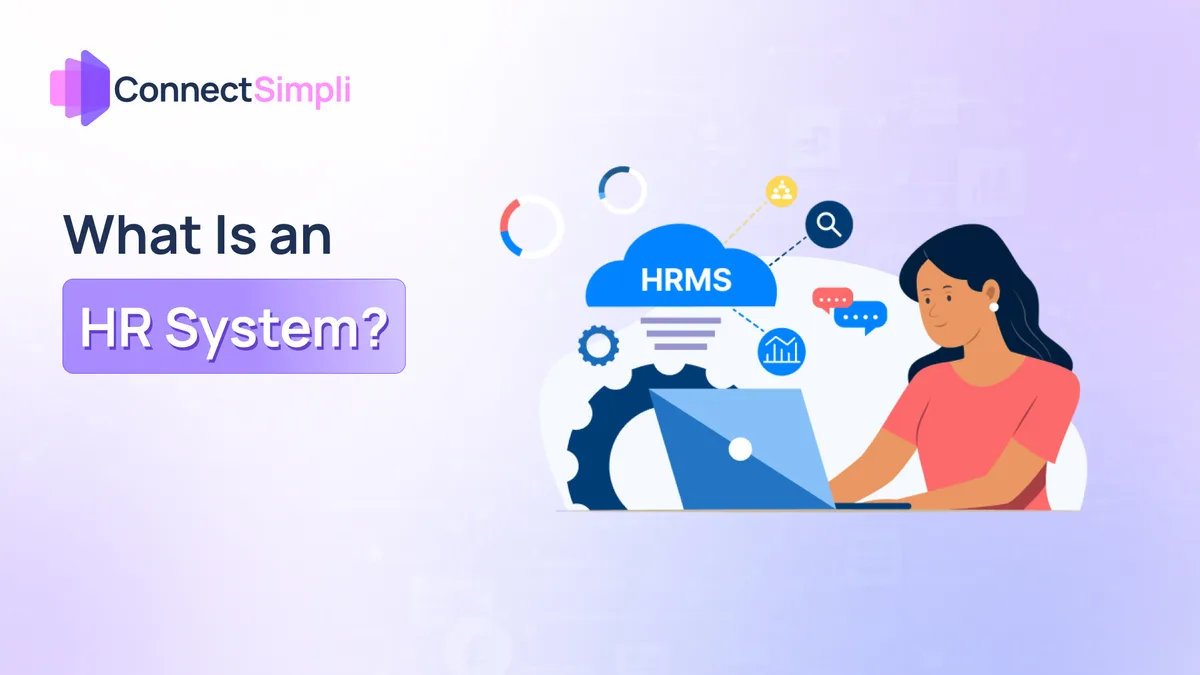
An HR system is a structured system used by an organisation to manage employee information and human resources processes.
An HR system can be manual, digital, or a combination of different processes.
Today, however, the term is often used to describe HR software that brings employee information and HR processes together in one platform.
What Does an HR System Mean?
In simple terms, an HR system helps a business organise how it manages its employees.
Depending on the system, it may help manage areas such as:
- Employee information
- Employee records
- Recruitment
- Onboarding
- Attendance
- Leave
- Payroll
- Performance
- Documents
- Employee feedback
- HR reporting
The exact capabilities vary between HR systems.
Some systems focus on one specific HR function, while others provide a broader platform for managing the employee lifecycle.
How Does an HR System Work?
An HR system generally works by storing employee information in a central location and connecting that information with relevant HR processes.
For example, an employee’s basic information might be stored in the system.
That information can then be connected to processes such as:
Employee → Department → Job → Attendance → Leave → Payroll
Instead of keeping each piece of information in a different spreadsheet, an integrated system can connect these areas.
This can make HR administration more organised.
What Does an HR System Manage?
Different HR systems offer different capabilities, but many modern systems can support several common HR functions.
Employee Information
An HR system can store important employee information in a structured format.
This can include:
- Personal details
- Job information
- Department
- Job title
- Employment information
- Documents
This creates a central employee record.
Employee Onboarding
HR systems can also help organisations manage the onboarding process.
Instead of relying entirely on emails and paper forms, businesses can organise onboarding tasks and employee information through a central system.
This can make it easier for HR teams to provide a consistent onboarding experience.
Attendance and Working Hours
An HR system may also track employee attendance and working hours.
Depending on the system, businesses may be able to manage:
- Attendance records
- Working schedules
- Hours worked
- Absences
- Late arrivals
For organisations that need structured attendance management, a dedicated Time and Attendance system can help centralise attendance information.
Leave Management
Managing leave through emails and spreadsheets can become difficult as the number of employees increases.
An HR system can help employees submit leave requests while managers or HR teams review and approve them.
The system can also help maintain leave balances and records.
This is where Leave Management software can simplify the process.
Payroll Management
Some HR systems include payroll functionality or connect employee information with payroll processes.
Payroll-related information can include:
- Salary
- Allowances
- Deductions
- Attendance
- Leave
- Employee changes
A dedicated Payroll Management system can help businesses organise payroll processes more efficiently.
Performance Management
An HR system may also support employee performance processes.
This can include:
- Goals
- Performance reviews
- Feedback
- Employee development
Instead of keeping performance information in separate files, businesses can maintain a more structured record.
Employee Documents
Businesses often need to store employee documents throughout the employee lifecycle.
An HR system can help organise documents related to employees and make them easier for authorised users to access.
A dedicated Document Management system can provide more structured document organisation.
Employee Feedback
Some HR systems include tools for collecting employee feedback.
Businesses can use employee feedback to understand:
- Employee satisfaction
- Workplace concerns
- Engagement
- Areas for improvement
This can give HR teams information that isn’t always visible through standard employee records.
HR Reporting
One of the major benefits of a digital HR system is the ability to use employee information for reporting.
HR teams may be able to analyse:
- Headcount
- Attendance
- Leave
- Employee turnover
- Performance
- Workforce trends
This can help HR managers and business leaders make decisions using actual workforce information.
What Is the Difference Between an HR System and HR Software?
The terms are often used interchangeably.
An HR system can refer broadly to the overall system an organisation uses to manage human resources.
HR software generally refers specifically to the digital technology used to manage those processes.
For example, a company might have an HR system that includes:
- HR policies
- Processes
- People
- Technology
The HR software would be the digital platform supporting those activities.
What Is an HR Management System?
An HR Management System, often called an HRMS, is a software platform designed to help organisations manage multiple HR functions.
An HRMS may include:
- Employee management
- Recruitment
- Onboarding
- Attendance
- Leave
- Payroll
- Performance
- Reporting
The purpose is to bring more HR activities into a connected system.
What Is an HR Information System?
An HR Information System (HRIS) is a system used to collect, store, manage, and access employee and HR information.
The focus is often on maintaining structured workforce data.
Depending on the software, an HRIS may also provide tools for other HR processes.
HRIS, HRMS, and HR software are sometimes used differently by different software providers, so it’s important to look at what a particular platform actually includes rather than relying only on the label.
Why Do Businesses Use HR Systems?
Businesses use HR systems because managing employee information manually can become increasingly difficult.
An HR system can help provide:
Centralised Information
Employee information can be stored in one structured location.
Better Organisation
HR teams can manage processes systematically rather than relying on disconnected spreadsheets and emails.
Less Manual Work
Automation can reduce repetitive administrative tasks.
Easier Access
Authorised users can access relevant information when they need it.
Better Reporting
HR teams can use workforce information to create reports and identify trends.
Improved Employee Experience
Employees can have clearer ways to submit requests and access relevant HR processes.
HR System vs Manual HR Processes
Let’s imagine a company with 100 employees.
Without a central HR system, the company might manage:
- Employee records in Excel
- Leave requests through email
- Attendance in another spreadsheet
- Documents in folders
- Performance reviews in Word documents
- Payroll in separate software
This can create duplicated information and increase the chance of mistakes.
With an integrated HR system, many of these processes can be connected.
That doesn’t automatically solve every HR problem, but it can make information easier to manage.
What Should You Look for in an HR System?
Choosing an HR system isn’t just about finding the platform with the longest feature list.
Businesses should consider whether the system fits their actual needs.
Important factors can include:
Ease of Use
Employees and HR teams should be able to use the system without unnecessary complexity.
Centralised Employee Information
The system should make employee information easy to organise.
Access Controls
Different users may need different levels of access to employee information.
Reporting
HR teams should be able to access useful workforce information.
Scalability
The system should be able to support the organisation as it grows.
Mobile Access
For modern workplaces, mobile access can be useful for employees and managers who aren’t always at a desk.
Integration
Businesses may also want their HR system to work alongside payroll or other business tools.
Is an HR System Useful for Small Businesses?
Yes.
An HR system isn’t only for large corporations.
Small businesses can also benefit from organised employee management.
In a small company, one HR employee may be responsible for many processes.
A central system can reduce repetitive administrative work and make employee information easier to manage.
As the company grows, having structured HR processes already in place can make expansion easier.
Is an HR System Useful in Pakistan?
HR systems can be useful for businesses in Pakistan that want to move away from manual employee management and organise their HR processes digitally.
Businesses may need to manage employees across different departments, locations, schedules, and working arrangements.
A dedicated HR software platform for Pakistan can help organisations centralise employee management and streamline relevant HR processes.
The right system should be selected according to the organisation’s size, workforce, processes, and requirements.
How Does an HR System Help HR Managers?
An HR system can reduce the amount of time HR managers spend searching for information and completing repetitive administrative tasks.
Instead of checking multiple files, an HR manager can access relevant information from a central platform.
This can allow HR professionals to spend more time on:
- Employee development
- Workforce planning
- Employee relations
- Performance
- Recruitment
- Business strategy
Technology doesn’t replace the human side of HR.
It supports it.
What Are the Challenges of Using an HR System?
Implementing an HR system can also have challenges.
Businesses may need to:
- Transfer existing employee data
- Train employees
- Set up access permissions
- Adjust existing processes
- Encourage employees to use the system
Choosing software that is easy to use and providing proper training can make adoption easier.
The goal should be to improve HR processes rather than simply digitise inefficient processes.
Final Thoughts
So, what is an HR system?
An HR system is a structured way for an organisation to manage employee information and HR processes.
Modern digital HR systems can bring areas such as employee records, onboarding, attendance, leave, payroll, performance, documents, and reporting into a more connected environment.
For small businesses, an HR system can provide structure as they grow.
For larger organisations, it can help manage a more complex workforce.
Ultimately, the best HR system isn’t necessarily the one with the most features.
It’s the one that makes your organisation’s HR processes simpler, more organised, and easier to manage.
FAQs About HR Systems
What is an HR system?
An HR system is a system used to manage employee information and human resources processes within an organisation.
What does an HR system do?
Depending on the platform, it can manage employee records, onboarding, attendance, leave, payroll, performance, documents, feedback, and HR reporting.
What is the difference between HR software and an HR system?
HR software usually refers to the digital technology used to manage HR processes, while an HR system can refer more broadly to the overall people, processes, policies, and technology used by an organisation.
What is an HRMS?
An HRMS, or Human Resource Management System, is software designed to help businesses manage multiple HR functions through a central platform.
Is an HR system useful for small businesses?
Yes. An HR system can help small businesses organise employee information and create structured HR processes as their workforce grows.
What is an HRIS?
An HRIS, or Human Resources Information System, is a system used to store, manage, and access employee and HR information.
Can an HR system manage payroll?
Some HR systems include payroll functionality, while others integrate with separate payroll systems.
Can HR systems be used in Pakistan?
Yes. Businesses in Pakistan can use HR systems to organise employee information and manage relevant HR processes digitally.